
What Is a Managed Edge Data Center and Who Needs One?
Updated: Aug 3

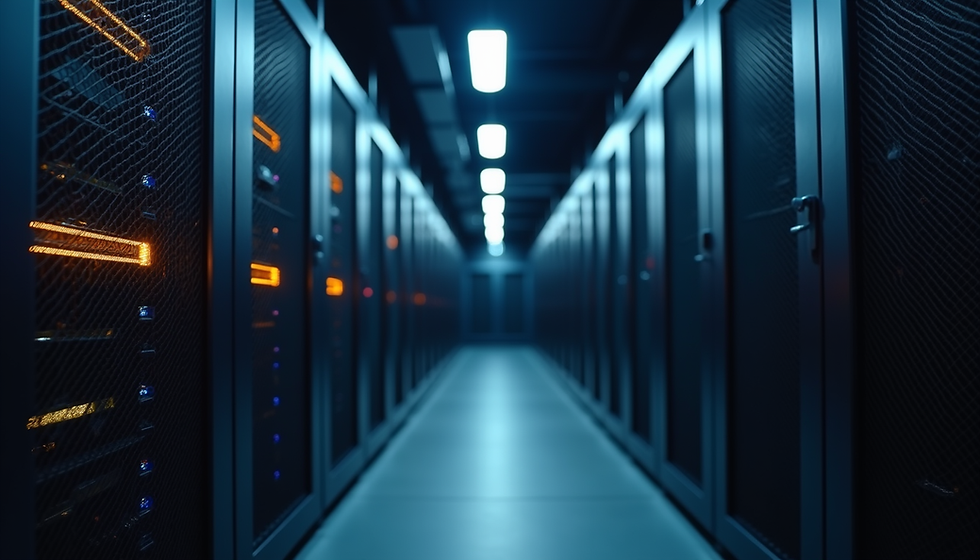
A managed edge data center is a localized computing environment that processes, stores, and manages data closer to the people, devices, buildings, and systems generating it. Instead of sending every request to a distant cloud region or centralized data center, an edge facility handles time-sensitive workloads near the source. The managed component means that a qualified provider oversees the infrastructure, connectivity, monitoring, maintenance, security, and ongoing support.
For commercial properties, distributed enterprises, and connected campuses, this model can deliver faster performance, more reliable operations, and greater control over critical systems. It is also becoming increasingly important as organizations prepare for more connected devices, artificial intelligence applications, advanced automation, private wireless networks, and the eventual arrival of 6G.
Understanding the Edge Data Center Model
Traditional cloud computing relies on large, centralized data centers that may be hundreds or thousands of miles away from a user or device. This model remains valuable for large-scale storage, software applications, backups, and workloads that do not require an immediate response.
However, many modern systems cannot afford the delays that may occur when data must travel to a distant cloud environment and back. Smart building controls, security cameras, access systems, industrial sensors, and connected equipment often need to process information quickly.
An edge data center brings computing resources closer to where the data is created. It may be located inside a commercial property, near a group of buildings, within a metropolitan area, or at another strategically selected point in the network.
A managed edge environment typically includes:
Computing servers
Data storage systems
Network switches and routers
High-capacity internet connectivity
Backup power systems
Cooling and environmental controls
Firewalls and cybersecurity protections
Remote monitoring tools
Redundant network connections
Professional maintenance and technical support
The exact configuration depends on the property, workload, security requirements, and expected growth.
What Makes an Edge Data Center "Managed"?
Owning infrastructure and managing it are two different responsibilities. An organization may have the budget to purchase servers, switches, and storage equipment, but lack the internal personnel to operate those systems around the clock.
In a managed edge data center arrangement, a service provider handles some or all of the day-to-day operational work. This can include:
Designing the network and infrastructure
Installing and configuring equipment
Monitoring performance and availability
Applying software and firmware updates
Troubleshooting connectivity issues
Replacing failing components
Managing backups and redundancy
Maintaining cybersecurity controls
Planning capacity upgrades
Providing technical support
This approach gives the organization access to edge computing capabilities without requiring it to build a large internal infrastructure team.
The provider may manage equipment located directly on the customer’s property, within a nearby facility, or across multiple connected locations. Some solutions combine on-premises infrastructure with public cloud services, private cloud platforms, or colocation environments.
How Does a Managed Edge Data Center Work?
A managed edge data center receives data from nearby devices, applications, users, or building systems. It then processes that data locally or determines which information should be sent to a centralized cloud platform.
For example, consider a commercial building with hundreds of security cameras.
Sending every second of high-resolution video to a remote cloud platform may consume significant bandwidth and create performance challenges.
An edge data center can analyze the video locally, identify relevant events, and send only important footage or alerts to the cloud. The property can reduce bandwidth consumption while improving response times.
A similar model can support:
Real-time access control decisions
Heating and cooling optimization
Occupancy monitoring
Predictive equipment maintenance
Smart parking systems
Digital signage
Tenant applications
Building automation
Energy management
Local artificial intelligence processing
The edge environment does not necessarily replace the cloud. In many cases, the two work together. The edge handles immediate and local processing, while the cloud supports long-term storage, centralized analytics, reporting, and large-scale coordination.
Key Benefits of a Managed Edge Data Center
Faster Response Times
One of the biggest advantages of edge computing is reduced latency. Latency refers to the delay between sending a request and receiving a response.
When data is processed close to its source, it does not have to travel as far. This can make applications feel faster and help automated systems respond more quickly.
Low latency is especially important for technologies such as:
Artificial intelligence
Robotics
Video analytics
Augmented reality
Virtual reality
Connected vehicles
Industrial automation
Emergency response systems
Smart building controls
As properties become more automated, small delays can affect safety, productivity, tenant satisfaction, and operational efficiency.
Greater Reliability
A centralized cloud application may become unavailable if a property loses its internet connection. An edge system can allow certain applications to continue operating locally, even when communication with the cloud is interrupted.
For example, access controls, environmental systems, or local security tools may continue to function using on-site processing.
Managed edge solutions can also include redundant internet connections, backup equipment, automatic failover, and continuous monitoring. These safeguards reduce the likelihood that a single failure will disrupt the entire operation.
More Efficient Bandwidth Usage
Connected properties can generate enormous amounts of data. Cameras, sensors, wireless devices, automation platforms, and tenant applications may all compete for network capacity.
Edge computing can process and filter data locally before transmitting it elsewhere. Instead of uploading every piece of raw information, the system can send only what is necessary.
This can help organizations:
Reduce unnecessary network traffic
Improve application performance
Control cloud data transfer costs
Prioritize critical workloads
Avoid network congestion
Support more connected devices
Efficient bandwidth management becomes increasingly valuable as the number of devices within a property grows.
Improved Data Control
Some organizations prefer to keep sensitive information within a specific property, campus, region, or network environment. Local processing can help limit how much data must travel to external platforms.
Depending on the system design, an edge data center may support stronger control over:
Security footage
Tenant information
Operational data
Financial transactions
Equipment performance records
Proprietary business information
Data privacy and regulatory requirements vary by industry. A managed provider can help design an infrastructure strategy that aligns with the organization’s operational and compliance needs.
Easier Scalability
A properly designed managed edge solution can grow as the property or business adds new users, devices, applications, and locations.
Instead of rebuilding the entire network whenever requirements change, the organization can expand computing capacity, storage, connectivity, and redundancy in stages.
Scalability is especially important for property owners and managers who expect to add:
New tenants
Smart building platforms
Security devices
Wireless access points
Electric vehicle charging stations
Internet of Things sensors
Automated building systems
New properties within a portfolio
The edge environment should support both current operations and future development.
Who Needs a Managed Edge Data Center?
Not every organization needs a full-edge data center. A small office using basic cloud software may be well served by a reliable business internet connection and standard networking equipment.
A managed edge data center becomes more relevant when an organization operates many connected systems, requires real-time performance, manages sensitive data, or cannot tolerate extended downtime.
Commercial Property Owners and Managers
Modern commercial buildings depend on far more than basic internet service. They may include connected HVAC systems, access controls, surveillance cameras, tenant Wi-Fi, environmental sensors, smart elevators, energy management tools, and digital signage.
A managed edge solution can provide the local processing and network performance required to coordinate these technologies.
It can also help property managers create a more consistent technology experience across multiple buildings.
Multifamily Properties
Apartment communities increasingly offer smart locks, connected thermostats, property-wide Wi-Fi, package management systems, mobile access tools, security platforms, and resident applications.
These services depend on reliable connectivity and well-designed infrastructure. An edge environment can process local data, reduce latency, and support building operations even when external cloud access is limited.
Retail Centers
Retail properties may use video analytics, point-of-sale systems, digital displays, inventory tracking, guest Wi-Fi, customer traffic analysis, and security tools.
A local edge environment can help process large volumes of data without overwhelming the network. It may also improve the responsiveness of customer-facing and operational applications.
Healthcare Facilities
Healthcare organizations often rely on connected medical equipment, patient monitoring systems, digital imaging, security platforms, and electronic records.
Some healthcare applications require rapid response times and careful data handling. A managed edge data center can support local processing while connecting approved information to cloud and centralized systems.
Any solution for a healthcare environment must be designed around applicable security, privacy, and compliance obligations.
Manufacturing and Industrial Facilities
Manufacturers use sensors, cameras, robotics, automated production systems, and predictive maintenance tools to improve output and reduce downtime.
These technologies may generate data continuously and require immediate decisions. Sending every request to a remote cloud platform may not provide the speed or consistency required on the production floor.
Edge computing allows facilities to analyze equipment data locally and respond quickly when conditions change.
Hospitality Properties
Hotels, resorts, and conference centers support large numbers of guests, employees, connected devices, security systems, entertainment platforms, and building controls.
A managed edge environment can help deliver reliable Wi-Fi, support operational technologies, and process data closer to the property.
This is particularly valuable during conferences, seasonal demand spikes, or other periods of unusually heavy network use.
Educational Campuses
Schools and universities manage student devices, security systems, research applications, digital learning tools, video platforms, and building automation.
An edge data center can improve local performance and support applications that require high bandwidth or low latency. It can also help institutions manage data across multiple buildings or campuses.
Distributed Businesses
Organizations with many branches, stores, offices, or service locations may struggle to provide consistent application performance across every site.
Managed edge infrastructure can support standardized local computing at each location while allowing centralized oversight. This model gives the business both local responsiveness and organization-wide visibility.
Signs Your Property May Need Edge Computing
A managed edge data center may be worth considering when:
Your network regularly becomes congested
Cloud-based applications experience noticeable delays
Your property generates large amounts of video or sensor data
Critical systems must continue working during an internet outage
You operate many smart building technologies
You need faster local artificial intelligence processing
Your current server room lacks professional monitoring
You are expanding to additional buildings or locations
Your internal IT team is stretched too thin
You need stronger control over where data is processed
Your property requires multiple redundant connections
You are planning for private wireless, 5G, or future 6G applications
These challenges do not automatically require a large data center. In some cases, a compact edge deployment may be sufficient. A network and infrastructure assessment can help determine the right scale.
Preparing for 6G and the Next Generation of Connected Properties
Although 5G networks are still expanding, technology leaders are already considering how future 6G connectivity could influence businesses, buildings, and cities.
6G is expected to support increasingly dense device environments, advanced automation, immersive digital experiences, and extremely responsive communications.
The exact standards and commercial capabilities will continue to develop, but the broader direction is clear: properties will generate more data and depend on faster local decision-making.
Future-ready properties may need to support:
Large networks of intelligent sensors
Autonomous building operations
Advanced digital twins
Real-time spatial computing
Immersive tenant and visitor experiences
AI-driven security systems
Predictive infrastructure management
Connected transportation systems
More sophisticated private wireless networks
High-density machine-to-machine communication
Faster wireless technology alone will not solve every infrastructure challenge. A building may have advanced wireless coverage, but applications can still experience delays if data must travel to a distant processing location.
Edge computing helps complete the picture. It places computing and storage closer to the wireless network, creating an infrastructure foundation that can support low-latency applications.
Organizations do not need to install a 6G network today to prepare for 6G. They can begin by strengthening their underlying infrastructure, including fiber connectivity, structured cabling, power capacity, network redundancy, equipment space, monitoring, and scalable computing resources.
Managed Edge Data Center vs. Traditional Data Center
A traditional data center is usually designed to serve a broad geographic area or an entire organization. It may host large business applications, databases, cloud platforms, and long-term storage systems.
An edge data center is typically smaller and closer to users or devices. It focuses on workloads that benefit from local processing.
The main differences include:
Location: Edge facilities are placed closer to data sources.
Latency: Edge systems can respond faster to local requests.
Scale: Edge environments are often smaller and distributed.
Workloads: Edge systems prioritize real-time and location-specific applications.
Management: Managed edge services can reduce the need for on-site technical staff.
Connectivity: Edge facilities rely on strong links to local devices, central systems, and cloud platforms.
Many organizations use both models. Central data centers and cloud platforms provide scale, while edge systems deliver speed and local resilience.
What to Look for in a Managed Edge Provider
The right provider should understand both information technology and the physical infrastructure of a property.
Important capabilities include:
Business-grade internet connectivity
Network architecture and design
Structured cabling
Fiber installation
Equipment configuration
Redundant connectivity options
Cybersecurity planning
Remote monitoring
On-site technical support
Capacity planning
Multi-property standardization
Clear service-level expectations
Local support can be particularly valuable. When an issue affects a physical property, remote troubleshooting may not always be enough. A provider with local expertise can understand the building, coordinate on-site work, and communicate directly with property stakeholders.
Frequently Asked Questions
What is a managed edge data center?
A managed edge data center is a local or regional computing environment operated by a service provider. It processes and stores data close to the users, devices, or systems generating it.
How is edge computing different from cloud computing?
Edge computing processes data near its source, while cloud computing typically relies on centralized, remote data centers. Many organizations use both together.
Does an edge data center replace the cloud?
Usually, no. Edge infrastructure handles time-sensitive or local workloads, while the cloud supports centralized applications, large-scale storage, and long-term analytics.
Is a managed edge data center only for large companies?
No. Smaller organizations and individual properties may benefit from compact edge deployments, especially when they operate many connected systems or require reliable local processing.
Can edge computing improve internet speed?
Edge computing does not increase the raw speed of an internet circuit, but it can make applications respond faster by reducing the distance data must travel.
Can local systems continue working during an internet outage?
Some edge applications can continue operating locally during an outage. The exact level of continuity depends on how the system, power backup, connectivity, and applications are designed.
Is edge computing secure?
Edge computing can support strong security, but it must be properly designed and maintained. Security measures may include access controls, encryption, firewalls, monitoring, segmentation, updates, and physical protection.
How does a managed edge data center prepare a property for 6G?
It creates local computing, storage, connectivity, and network capacity that can support future high-speed, low-latency wireless applications. It also gives the property a more scalable infrastructure foundation.
What types of data can be processed at the edge?
Common examples include security video, sensor data, equipment telemetry, access control requests, building automation information, artificial intelligence workloads, and user application data.
How do I know what size edge deployment I need?
The appropriate size depends on the number of devices, applications, locations, users, performance requirements, storage needs, and growth plans. A professional infrastructure assessment can identify the right configuration.
Build a Smarter, More Connected Property With Infinet Networks
Reliable connectivity is not just a utility. It is the backbone of every smart property. Whether you manage a single commercial building or an entire portfolio, we deliver the business internet and infrastructure needed to keep it all running without interruption.
InfiNet designs, installs, and supports dedicated networks that grow with your needs. You get the performance of enterprise-grade systems, backed by local expertise and real people who answer when you call.
As connected buildings evolve and the industry prepares for 6G, now is the time to strengthen your property’s network foundation. Ready to connect? Let’s talk about a custom internet solution for your property. Contact us today.


Comments